


by Dr. Sarada Prasad Kar
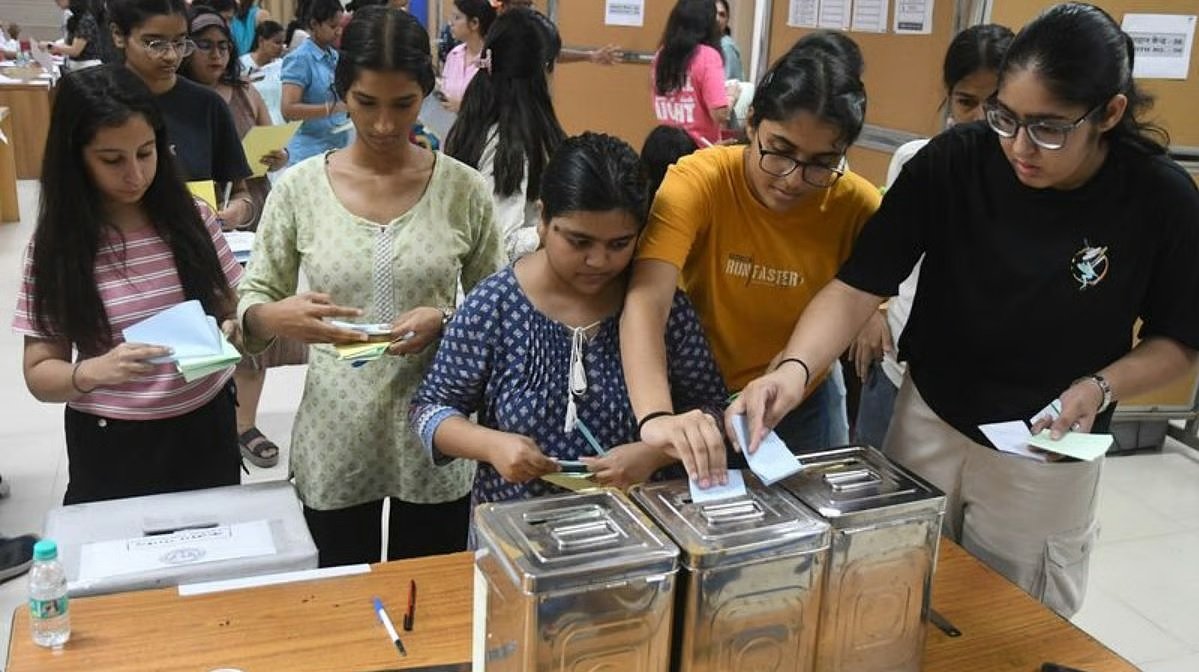
FINALLY, the Odisha Government gave assent to students’ union elections that had been suspended since 2017. With campus violence a concern, Chief Minister Mohan Charan Majhi’s approval to resume Odisha’s students’ union elections after eight years will entail strict security measures.
Officials have decided to hold elections with colleges scheduled to release their own notifications on October 7. Nominations open on October 9, elections take place October 15, and the oath-taking ceremony will be held the morning of October 16. Following a meeting with the Odisha Chief Minister, Higher Education Minister Suryabanshi Suraj announced that the department will soon share complete details and a timeline. While the Higher Education Minister’s sudden focus on the election timeline suggests a fair process, insiders suspect the move is a strategic effort to secure a favorable outcome rather than leaving it to chance.
To ensure peaceful elections the Supreme Court’s 2005 verdict and the recommendations of the J. M Lyngdoh Committee, which were followed earlier, will continue to be implemented. Resumption of student union elections in states like Odisha after long hiatuses has been a compulsion for the saffron party, which had promised elections to student union in their election manifesto. The Supreme Court continues to treat the Lyngdoh norms as benchmark guidelines for orderly campus elections, though courts routinely emphasize that individual colleges and universities retain the autonomy to decide whether conditions permit holding active polls or if a nomination system is safer.
As financial caps prescribed, the maximum campaign expenditure permitted per candidate is capped at Rs 5,000, and candidates must submit audited accounts, this will allow a viable process. Parties are not allowed to directly sponsor candidates to keep campus elections insulated from mainstream party politics. But when the Delhi University Students’ Union (DUSU) elections are most frequently blamed for boundless expenses and flagrant violations that completely defy the Lyngdoh Committee guidelines, how can we expect fair play? The DUSU polls are infamously characterized by student organizations spending lakhs and sometimes crores of rupees. By hosting expensive parties, renting luxury convoys of SUVs, organizing free trips to amusement parks, and putting up large billboards, they have surpassed all limits. Massive print campaigns involving lakhs of pamphlets and posters routinely litter the capital city and the campuses as well. These relentless violations, has bound the Delhi High Court to repeatedly intervene, withheld election results until candidates fully cleared the defaced public infrastructure and paid the damage.
Monolithic Gen-Z students gathered in Pune to listen to Congress leader Rahul Gandhi at the “chhatron ki goonj” programme recently might have triggered the Centre’s command to states to go for elections. Allegations of corruption by Opposition parties against the incumbent government might have alarmed the CM to attract a major chunk through campus drive.
The way, the Higher Education Minister stated, “Holding student elections matters because today’s youth will lead Odisha tomorrow, teaching them democratic duties and constitutional values” is no hyperbolic statement. While declaring that “today’s students and student leaders are the future leaders of Odisha” might sound like an exaggeration: the reality of youth unrest is due to political upbringing which can’t be ignored? To mitigate growing discontent and adapt to the changing face of protests across the country, the government aims to channel this youthful energy constructively by reviving and celebrating student suffrage. How these processes can help students understand democratic responsibilities!
Among key recommendations of the Lyngdoh Committee, candidates must be regular, full-time students and must maintain a minimum attendance of 75 percent criteria. Undergraduate candidates should ideally be between 17 and 22 years old and PG candidates should be between 24 and 25 years old. Students with any prior criminal record, pending criminal cases, or past disciplinary action by university authorities are strictly barred from contesting. As number of attempts, a maximum of two opportunities to contest will also be strictly ensured. The Ministry of Human Resource Development (MHRD) formed the committee in 2005, headed by former Chief Election Commissioner J.M. Lyngdoh, to clean up campus politics and reduce the influence of money and muscle power has not paved a suitable way.
On 15th of this month, the clarity in election of student enfranchisement in Odisha will come to light.
(The author is a senior columnist and TV panelist in Odisha)

Comments are closed.