


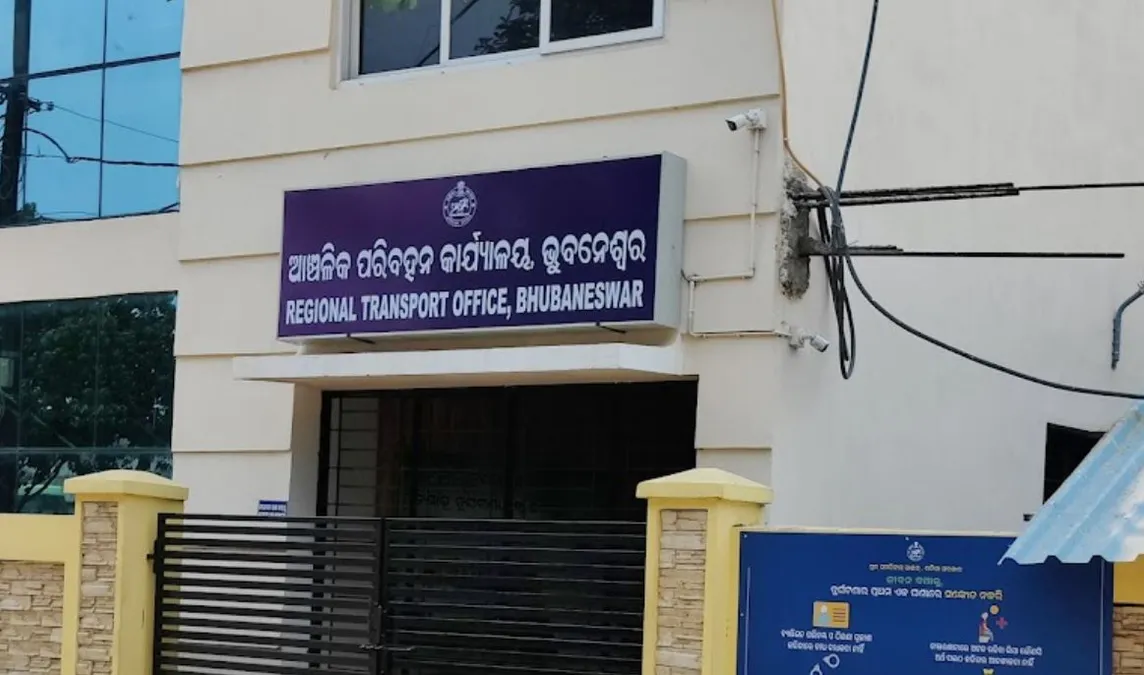
Bhubaneswar: The Odisha Transport Department has directed all Regional Transport Offices (RTOs) and Assistant Regional Transport Offices (ARTOs) across the state to strengthen their public help desks to assist vehicle owners facing issues related to vehicle classification, archival status and reactivation in the VAHAN database.
The directive comes amid a rise in enquiries from vehicle owners following SMS alerts about the classification of their vehicles under the new system introduced by the Ministry of Road Transport and Highways (MoRTH).
The State Transport Authority (STA), Odisha, has instructed all RTOs and ARTOs to make their existing help desks fully functional during office hours and provide dedicated mobile numbers for public enquiries.
The offices have been asked to display the help desk location, working hours and contact numbers prominently on signboards in both Odia and English. The dedicated mobile numbers and details of the officials in charge must be communicated to the STA within three working days.
Four categories of vehicle classification
Under the vehicle classification framework implemented in the VAHAN application, vehicle records are categorised into four groups: Active-Compliant, Active-Non-Compliant, Temporary Archive and Permanent Archive.
The department has asked help desk personnel to explain the meaning of these categories, the reasons behind a vehicle’s classification and the corrective steps required from owners.
The order clarifies that the initial classification is automated in VAHAN based on MoRTH-approved criteria and is not a discretionary decision by the local RTO.
Vehicles categorised as Active-Non-Compliant are ordinarily reclassified as Active-Compliant once all applicable valid documents are updated in the VAHAN database.
However, vehicles placed under Temporary Archive or Permanent Archive can be restored only through the prescribed reactivation procedure and necessary approvals.
Online reactivation process
Vehicle owners whose vehicles fall under the Temporary Archive or Permanent Archive categories will be guided to apply through the official Parivahan portal.
They will have to select the concerned state and RTO and use the ‘Application for Vehicle Re-Activation’ option under VAHAN Citizen Services.
The application process requires the vehicle registration number, the last five characters of the chassis number, an OTP sent to the registered mobile number and applicable valid documents. Applicants have also been advised to preserve their application numbers for tracking purposes.
The order makes it clear that help desk personnel must not seek, retain or disclose an owner’s OTP or password.
Permanent Archive restoration not automatic
The department has drawn a clear distinction between Temporary Archive and Permanent Archive cases.
For vehicles under Temporary Archive, reactivation applications will be verified and digitally processed by the competent RTO authority after checking the applicable registration, fitness, insurance and Pollution Under Control Certificate (PUCC) details.
In certain cases, vehicles may move from Temporary Archive to Active-Non-Compliant status through system-based processing following the digital updating of insurance details, subject to prescribed conditions.
However, restoration of vehicles under Permanent Archive is not a routine entitlement. The concerned RTO must examine the exceptional grounds and supporting documents, make a reasoned recommendation and forward the case through the approval process prescribed by MoRTH.
Cases that are legally ineligible for restoration must be explained to vehicle owners accordingly.
Help desks to assist
Apart from vehicle classification and reactivation, the help desks will provide first-level assistance on various Registration Certificate (RC) and Driving Licence (DL)-related services.
These include fitness certificates, insurance and PUCC data updation, ownership transfers, hypothecation, tax and fee information, application status and Learner’s Licence services.
The department has directed RTOs and ARTOs to deploy a trained help desk in-charge and at least one alternate official to ensure that counters remain functional throughout office hours.
All RTOs, ARTOs, Motor Vehicle Inspectors (MVIs) and help desk personnel will undergo special training by the National Informatics Centre (NIC) on vehicle classification and the reactivation process.
No unauthorised charges or intermediaries
The order also emphasises grievance redressal and transparency. Every RTO and ARTO must maintain an enquiry-cum-grievance register, either physically or electronically, recording the nature of complaints, advice provided and action taken.
Walk-in enquiries should be addressed on the same day, as far as practicable. Unresolved matters must be referred to the concerned dealing section or supervisory officer by the next working day.
The department has also instructed officials not to collect unauthorised service charges or direct vehicle owners to intermediaries or touts. Staff must not create unnecessary anxiety by misrepresenting an archival category as an order cancelling the vehicle’s registration certificate.
Zonal Deputy Commissioners of Transport and RTO/ARTO officials have been asked to personally monitor the functioning of help desks and review important pending cases at least once a week.
All RTOs and ARTOs must submit an initial compliance report, including the dedicated mobile number and details of the help desk in-charge and alternate official, within three working days.
The Transport Commissioner has warned that non-functional help desks, misleading advice to citizens and undue delays in forwarding cases will be viewed seriously. The directions have come into force with immediate effect.

Comments are closed.