


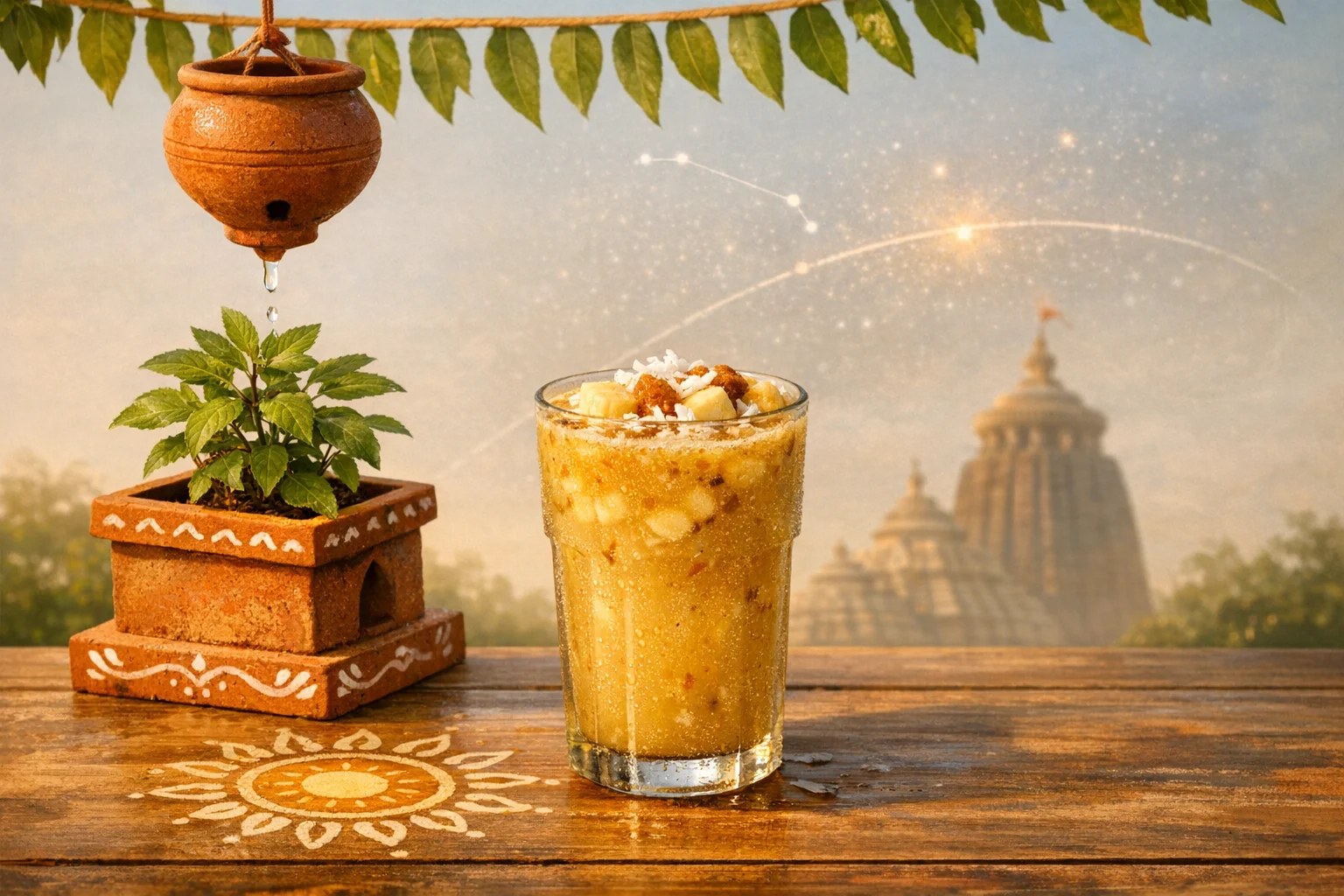
Bhubaneswar: Maha Bishuba Sankranti, also known as Pana Sankranti, marks the traditional New Year in Odisha. Across Odisha, families come together to welcome the new year with prayers, rituals, and festive foods on Tuesday.
Celebrated with devotion and joy, this festival reflects a beautiful blend of spirituality, culture, and gratitude towards nature. Maha Bishuba Sankranti holds deep cultural and spiritual meaning. It signifies the beginning of a new solar cycle and represents renewal, positivity, and balance in life.
According to traditional beliefs, this day marks the victory of light over darkness. People use this occasion to cleanse their thoughts, begin anew, and express gratitude for nature’s blessings. It is also a time to pray for harmony between humans, animals, and the environment.
The day begins early with a holy bath, symbolising purification of body and mind. Devotees visit temples and offer prayers, especially to Lord Shiva and Lord Hanuman, seeking health, prosperity, and protection.
One of the most important traditions is the preparation of the Pana drink. This refreshing beverage, made with jaggery, fruits, and water, is first offered to deities and then shared with family, friends, and the community.
Homes are decorated with mango leaves, and earthen pots filled with water—known as Pana Ghata—are hung outside houses. These pots slowly drip water, symbolising care for nature and helping cool the surroundings during the summer season.
Charity is another key part of the festival. People donate food, water, and clothes to those in need, reflecting compassion and social responsibility. The spirit of Maha Bishuba Sankranti extends beyond homes into public spaces. Cities like Bhubaneswar, Cuttack, and Puri come alive with vibrant celebrations.
Local fairs, known as melas, feature folk performances, traditional dances, and storytelling forms like pala and daskathia. Markets are filled with seasonal fruits, flowers, and festive items, adding colour and energy to the atmosphere.
Communities also organise events, cultural programs, and activities for children to help preserve Odisha’s rich heritage and pass it on to future generations.
Astrologically, the Sun’s entry into Aries marks the start of a new year in the solar calendar. This transition is believed to bring fresh energy, courage, and growth.
Many devotees offer prayers to the Sun God, seeking strength and clarity. The festival also honours the five natural elements—earth, water, fire, air, and space—highlighting the deep connection between human life and nature.
Meditation, yoga, and chanting are commonly practised, helping individuals align their physical and spiritual well-being. As Odisha welcomes the new year, the festival serves as a reminder that true happiness lies in community, compassion, and living in harmony with the world around us.

Comments are closed, but trackbacks and pingbacks are open.