


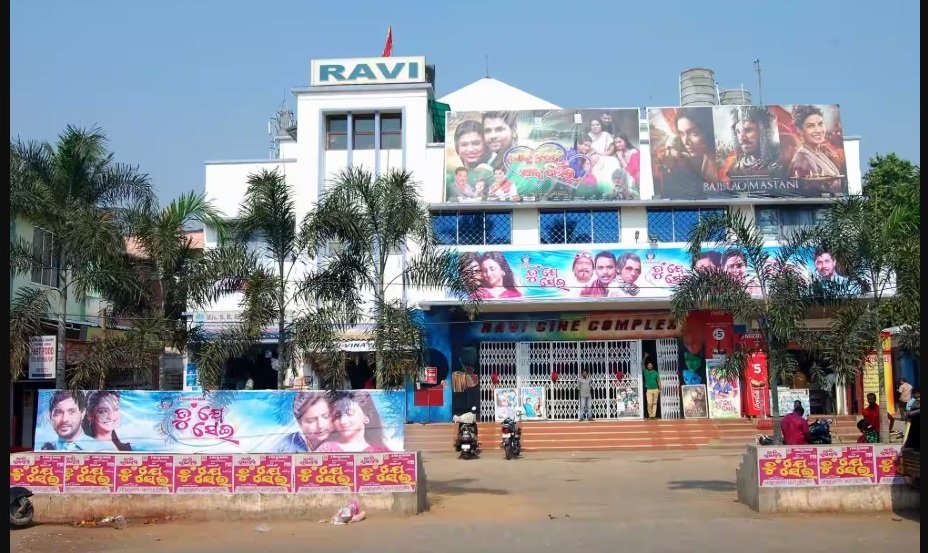
Bhubaneswar: Chief Minister Mohan Charan Majhi on Tuesday hailed the 90th anniversary of Odia cinema as a golden moment in the State’s cultural history, paying rich tributes to the pioneers who laid its foundation.
In a statement marking the milestone, the Chief Minister noted that April 28, 1936, holds special significance as the release date of Sita Bibaha, the first full-length Odia feature film. Directed and produced by Mohan Sundar Deb Goswami, the mythological film—based on the Ramayana and depicting the marriage of Lord Rama and Sita—premiered at Laxmi Talkies in Puri, just 27 days after Odisha was carved out as a separate province on linguistic lines.
“Since then, Odia cinema has overcome countless obstacles and struggles to give Odia art, language, and traditions a distinct identity on the world stage,” Majhi noted.
The Chief Minister emphasised that Odia films serve as more than entertainment; they act as a powerful mirror to society and a catalyst for cultural awakening. “Today, I respectfully remember the unparalleled contributions of all the actors, actresses, directors, producers, and behind-the-scenes artists who have shaped this rich tradition,” he wrote.
Majhi reaffirmed the government’s resolve to elevate the industry: “We are committed to taking Odia cinema to the pinnacle of modern technology and creativity, and to securing for it worldwide recognition.”
He concluded by conveying heartfelt greetings and congratulations to the people of Odisha, film enthusiasts, and artists on this historic occasion.
‘Sita Bibaha’, the film made on a modest budget of around Rs 30,000, laid the foundation for what would grow into Odisha’s own film industry, often called Ollywood.
Over the decades, Odia cinema has evolved dramatically—from mythological and devotional stories in its early years to socially conscious narratives in black-and-white, and later to vibrant, contemporary films that blend entertainment with relevance.
The 1970s and 1980s are widely regarded as the golden period of Odia cinema. Films then tackled socially relevant themes, rural life, family dynamics, and cultural identity, supported by memorable music that resonated across the country. Landmark movies such as ‘Shesha Shrabana’ (1976), ‘Maya Miriga’ (1984), and ‘Bhukha’ (1989) not only won National Film Awards but also put Odisha on the global cinematic map through screenings at international festivals.
However, the subsequent decades saw a decline in originality and audience engagement. Many films relied on repetitive formulas, causing the industry to lose some of its distinctive voice and wider appeal.
The COVID-19 pandemic hit Odia cinema particularly hard, bringing productions and theatrical releases to a near standstill. A slow but promising revival began around 2022. Babushaan Mohanty-starrer ‘DAMaN’ emerged as a game-changer, collecting approximately Rs 7.5 crore at the box office and winning both critical and audience praise. Its Hindi-dubbed version helped it reach audiences beyond Odisha.
This momentum continued with ‘Pratikshya’, which was appreciated for its authentic portrayal of middle-class Odia family life. In 2024, the action thriller ‘Karma’ raised the bar further by grossing over Rs 6.5 crore. The biggest breakthrough arrived in 2025 with ‘Bou Buttu Bhuta’, another Babushaan Mohanty film. The horror-comedy crossed Rs 20 crore and became the highest-grossing Odia film of all time, drawing national attention and proving that well-made, culturally rooted stories can deliver strong returns even on modest budgets.

Comments are closed.