


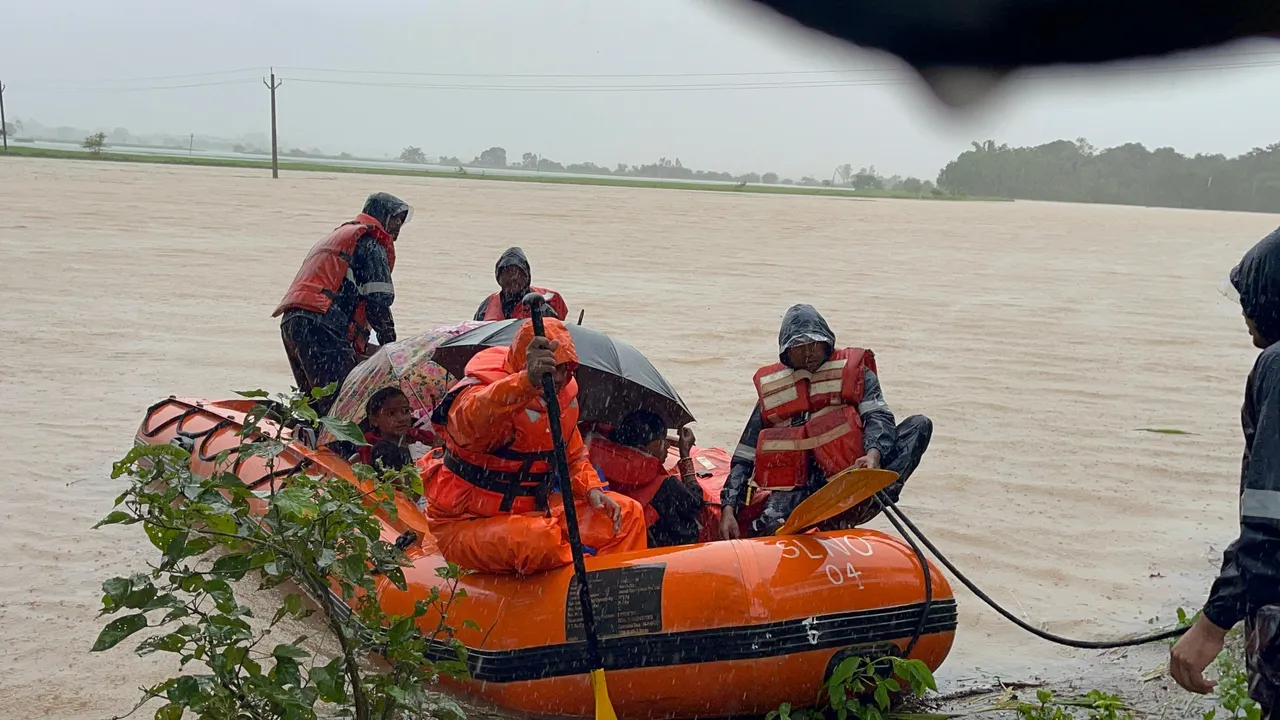
Bhubaneswar: Odisha Chief Secretary Anu Garg on Wednesday said unprecedented rainfall for three consecutive days was responsible for the recent floods in Ganjam district. She also rejected allegations of lapses in flood management.
The official’s statement assumes significance as BJD president and former chief minister Naveen Patnaik has described the floods as a “manmade crisis”.
Addressing a press conference, Garg said Ganjam witnessed exceptionally heavy rainfall, with Patrapur recording 546 mm of rain in a single day. She said the rainfall was the highest recorded in the area since 1990 and 2013.
The heavy downpour over three consecutive days made the situation particularly challenging, she said, adding that dam authorities released 60 to 65 per cent of the stored water during the critical period.
Garg maintained that there were no lapses in flood management and said protecting the safety of reservoirs was also a priority. She explained that the decision to open the dam gates simultaneously was taken in view of the volume and flow of water.
She also referred to the report submitted by the central team, which attributed the situation to unprecedented rainfall.
The Chief Secretary said restoration work was progressing rapidly across the affected areas. She said electricity supply had been restored to all areas in Ganjam, with 99.99 per cent of consumers now receiving power.
The Water Resources Department is repairing damaged portions of canals, and there would be no disruption in the supply of irrigation water to farmers, she assured.
Garg further said more than 4,000 tube wells had been restored. Of the 420 damaged pipeline networks, 408 had been repaired, while the remaining restoration work would be completed soon.
Her remarks came after Naveen Patnaik, in a letter to Chief Minister Mohan Charan Majhi, termed the Ganjam floods a “manmade crisis” and held the state government responsible for the disaster. Naveen had alleged that the India Meteorological Department (IMD) issued the first warning on October 23, but the authorities failed to take adequate preventive measures.
Citing the standard operating procedure (SOP) for flood management, he said dam water levels should have been monitored round the clock and water released in advance of the heavy rainfall. However, water was released only after the onset of heavy cyclonic rains, which, according to Naveen, aggravated the flooding and resulted in significant loss.

Comments are closed.