


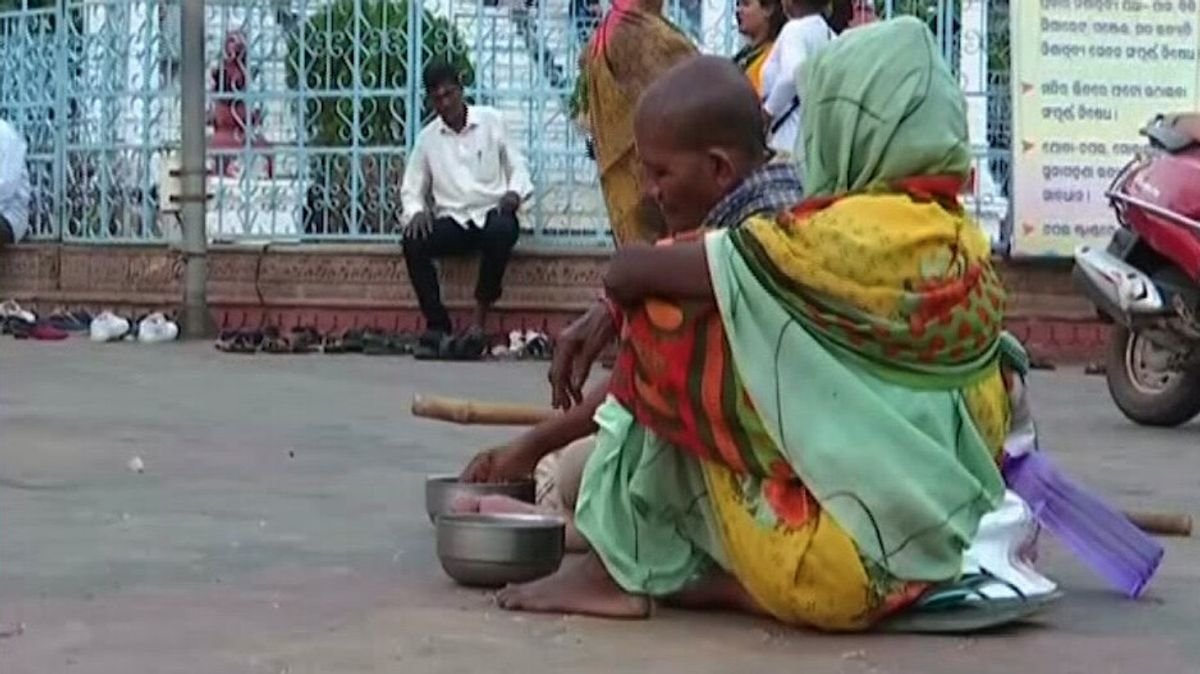
Bhubaneswar: The Odisha government’s ambitious plan to make Bhubaneswar a beggar-free city appears to be losing momentum, with beggars continuing to crowd major traffic intersections, markets and religious places despite the establishment of rehabilitation centres and allocation of funds.
Launched in 2021, the Ekamra Nilaya scheme was the first initiative of its kind in the state, aimed at rescuing and rehabilitating beggars and other vulnerable people. Under the programme, six rehabilitation centres have been established in the city.
The centres have separate facilities for elderly people, women, children, persons with disabilities and those suffering from mental health conditions. Each centre has the capacity to accommodate around 100 people.
The Bhubaneswar Municipal Corporation (BMC) has engaged several voluntary organisations to rescue beggars and manage the rehabilitation facilities. These organisations receive around Rs 4,000 per person to meet expenses related to food, accommodation and other basic necessities.
Rehabilitation efforts also include skill development programmes, such as tailoring and other vocational training, to help inmates become financially independent. Separate voluntary organisations have been engaged to provide the training, for which the BMC also provides financial assistance.
According to available information, more than 400 beggars and other vulnerable people are currently staying in these centres. Those who recover and return home are replaced by other rescued individuals. However, the programme’s effectiveness remains questionable. Many people who leave the rehabilitation centres are reportedly returning to the streets and resuming begging.
Task force remains ineffective
A special task force has been constituted under the BMC to monitor begging activities and coordinate rescue operations. It includes representatives from the BMC, police, Labour Department, District Child Protection Unit, Anti-Human Trafficking Unit and the Investigative Unit for Crime Against Women.
The task force is supposed to conduct regular visits at traffic intersections, markets, railway stations, bus terminals and other crowded public places. However, the mechanism appears to have become largely inactive, with little visible action on the ground.
The Urban Development Department recently directed BMC and other urban local bodies across Odisha to take stringent measures against begging during a high-level meeting held two days ago.
The state government had launched several initiatives, including Ekamra Nilaya and Niladri Nilaya, around five years ago to make urban areas beggar-free. Voluntary organisations were brought on board to carry out rescue and rehabilitation activities, with the government bearing the expenses.
Despite these efforts, begging continues to be visible across the State Capital. Several prominent locations in Bhubaneswar including Rupali Square, Ram Mandir Square, Kalpana Square, Rajmahal Square and Tinkapani Sai Temple, have emerged as regular begging hotspots.
Men, women, elderly people and persons with disabilities are seen seeking alms at these locations. A significant number of them are reportedly from outside Odisha. The growing involvement of children in begging has emerged as a particularly worrying concern.
Children are being made to sell flowers and pens, clean vehicles, or seek money from commuters. In some cases, mothers are seen carrying infants while begging on the streets. Jaydev Vihar and Kalpana Square are among the locations where child begging is reportedly witnessed regularly. The problem is not limited to street begging. Child labour continues to be reported in hotels, eateries and automobile garages across Bhubaneswar.
Smaller eateries, particularly in the outskirts of the city, reportedly employ more children than larger establishments. Children aged between 12 and 15 years are allegedly made to wash utensils, clean tables and perform other tasks.
Similar practices continue in garages, including establishments within the city. The District Child Protection Unit is responsible for monitoring and preventing child labour. However, the lack of regular inspections and enforcement has reportedly emboldened employers to continue employing children.
Even in cases where children are rescued during raids, some hotel and garage owners allegedly re-employ them after their return.
The Urban Development Department has also expressed concern over the persistence of child labour and directed officials to intensify inspections and take stringent action against those employing children.

Comments are closed.