


Eastern India’s Silicon Valley to come up at Kataka’s Naraj over 870 acre of land: CM

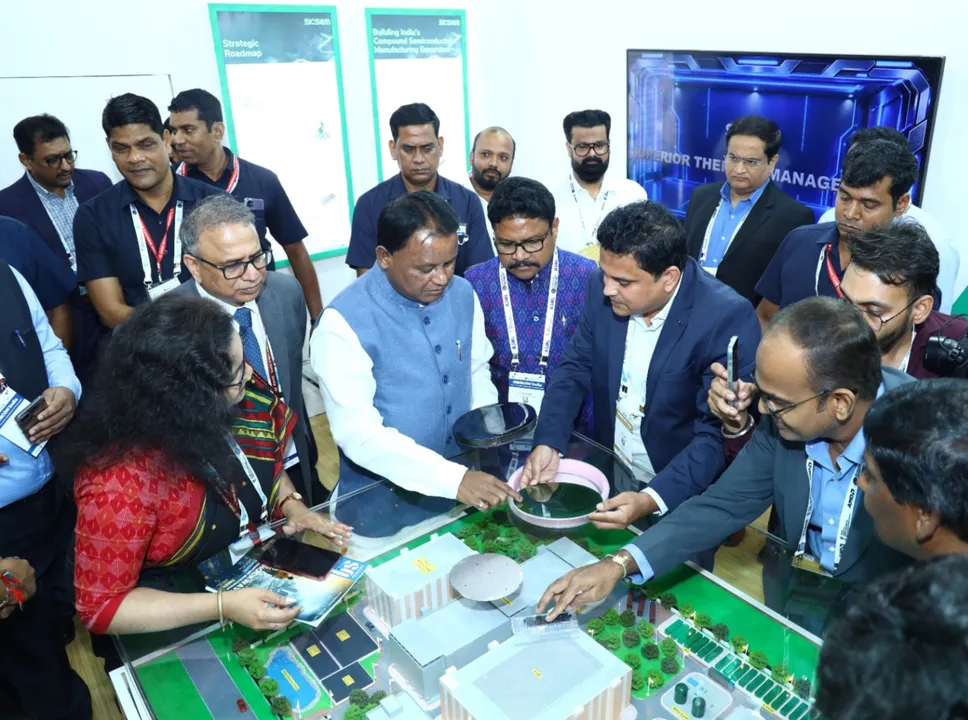
Bhubaneswar: In a significant boost to the Odisha’s semiconductor and electronics ecosystem, the State received investment proposals worth around Rs 23,600 crore with potential to generate 6,100 employment opportunities at the SEMICON India 2026 in New Delhi.
During the event, Chief Minister Mohan Charan Majhi held a series of high-level engagements with global and domestic semiconductor and technology companies, industry bodies and international delegations.
These include interactions with delegations from Japan, Sweden and Taiwan, as well as engagements with companies including Lam Research, Applied Materials, SiCSem, 3D Glass Solutions, Cyient, Linde and HORIBA India, among others.
The engagements also saw the signing of a Letter of Intent with QuadQuantum for a semiconductor facility to produce SiC substrate wafers, further strengthening Odisha’s engagement with the semiconductor and technology ecosystem at SEMICON India 2026.
On the occasion, the Chief Minister announced the development of Odisha Silicon Valley over an area of 870 acres at Naraj near Kataka. The Odisha Silicon Valley will host all major semiconductor, electronics, and IT projects, said a release of the State government.
“The area identified for Odisha Silicon Valley at Naraj offers a highly favourable strategic location from the standpoint of connectivity and industrial infrastructure. With seamless connectivity to the Cuttack–Bhubaneswar urban corridor, the site also provides efficient multimodal access to major ports such as Paradip and Dhamra, along with connectivity to key national highways. These advantages position Naraj as a potential strategic hub for the semiconductor supply chain, logistics and allied industries,” it.
According to the government, semiconductor fabrication facilities and assemble units require reliable access to substantial quantities of water and power, and the site’s proximity to the Mahanadi river provides a significant locational advantage for meeting industrial water requirements. Combined with its connectivity and infrastructure potential, Naraj offers a strong foundation for developing a world-class semiconductor and electronics ecosystem, it stated.
The Odisha Pavilion at SEMICON India 2026 showcased projects of RIR Power, SiCSem, 3DGS, ARF Design and educational institutions designing the first batch of Made in India chips such as NIT Rourkela, and PMEC Brahmapur.
“Odisha’s semiconductor journey is moving rapidly from intent to implementation. We have been able to attract investments across critical areas of the semiconductor value chain and, importantly, move key projects towards execution. At SEMICON India 2026, our discussions with industry leaders are focused on taking this momentum forward and bringing the next set of semiconductor investments to Odisha. We want to build an ecosystem where global and Indian technology companies can manufacture, innovate and grow,” said the Chief Minister.
Odisha’s journey towards building a semiconductor ecosystem is also being brought alive at the Odisha Pavilion through ‘Sand to Silicon’ presentation.
The installation gives a distinctive Odisha expression to the state’s semiconductor journey, connecting its identity with its growing ambitions in silicon and advanced technology. It also ties into Odisha’s larger vision of moving from a ‘Mine Economy’ to a ‘Mind Economy’.
The state has been taking a series of measures to build the wider ecosystem required to emerge as a leading semiconductor hub. It has been among the early movers in aligning its Semiconductor Policy with the evolving India Semiconductor Mission 2.0, with its recent Third Policy Amendment further expanding support to critical parts of the semiconductor value chain.
Through the amendment, Odisha has extended 25 per cent additional fiscal support to ISM-approved projects in semiconductor equipment manufacturing, semiconductor-grade gases, raw materials and supply-chain segments. The current policy framework also provides support for engineer relocation, manpower skilling, internships, international patents and R&D.
“Our approach is to build the ecosystem around semiconductor investments, not look at projects in isolation. Odisha has been an early mover in aligning its policy framework with ISM 2.0, while widening support to areas such as equipment, materials, gases and the supply chain. Alongside this, we are investing in specialised talent and creating the conditions that companies need to set up and scale their operations in the state,” Electronics & Information Technology Minister Mukesh Mahaling said.

Comments are closed.