


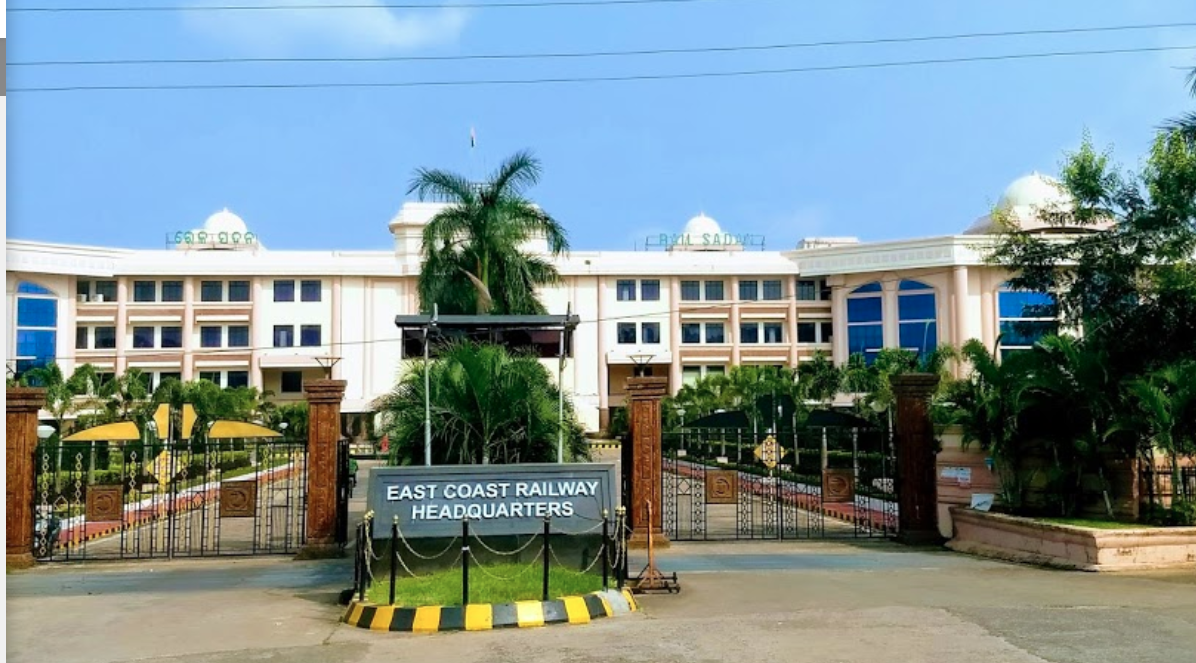
Bhubaneswar: Nearly seven years after its announcement in the 2019 Union Budget, the Ministry of Railways has formally notified the South Coast Railway (SCoR) as Indian Railways’ 18th zonal headquarters, headquartered in Visakhapatnam and set to become operational from June 1.
The development, which fulfils a long-standing demand from Andhra Pradesh following the state’s 2014 bifurcation, comes after years of competing claims between Andhra Pradesh and Odisha, particularly over the revenue-rich Waltair Division. The new zone has been carved out of the East Coast Railway (ECoR) and South Central Railway (SCR), with a total route length of about 3,300 km spanning Andhra Pradesh and parts of Telangana, Tamil Nadu, and Karnataka.
In a key administrative balancing act, the erstwhile Waltair Division has been bifurcated. The Odisha portions have been retained under ECoR as the newly created Rayagada Division, while the coastal and Andhra Pradesh segments form the Visakhapatnam Division under SCoR.
According to the Gazette notification issued by Railway Board Secretary R Mohanraja, the Centre, as part of the realignment, has transferred sections such as Palasa-Ichchapuram from ECoR’s Khurda Road division to Visakhapatnam, Raichur-Wadi from SCoR’s Guntakal division to SCR’s Secunderabad division, Vishnupuram-Pagidipalli-Janpahad from SCoR’s Guntur division to Secunderabad, and Kondapalli-Motumarri from Secunderabad to SCoR’s Vijayawada division.
The Rayagada Division, headquartered in Rayagada town and operational from June 1, will span 696 route km. It includes critical mineral corridors such as the 164 km Koraput-Singapur Road section, the 442 km Kottavalasa-Kirandul (KK) line, the 36 km Kuneru-Theruvali section, and the 54 km Gunupur-Paralakhemundi section. These routes handle significant volumes of iron ore, alumina, coal, and other mineral traffic originating from southern Odisha’s mining belts.
With the addition of Rayagada, ECoR will now comprise three divisions — Khurda Road, Sambalpur, and Rayagada. Railway officials in Odisha have welcomed the move, noting that retaining high-density mineral routes under ECoR addresses the state’s primary concerns regarding freight earnings and strategic interests. “The creation of the Rayagada Division is a significant safeguard. Most of the key mineral corridors that contribute substantially to freight loading remain within ECoR,” a senior official was quoted as saying.
As part of the realignment, the 53 km Palasa-Ichchapuram section (including stations at Palasa, Summadevi, Mandasa Road, Baruva, Sompeta, Jhadupudi, and Ichchapuram) has been transferred from ECoR’s Khurda Road Division to SCoR’s Visakhapatnam Division. Other adjustments include transfers involving sections like Raichur-Wadi and Vishnupuram-Pagidipalli to streamline operations.
The Biju Janata Dal (BJD) has opposed the Palasa-Ichchapuram transfer, arguing it would cause economic loss to ECoR. BJD spokesperson Lenin Mohanty demanded that sections from the South Eastern Railway (SER) in Keonjhar, Mayurbhanj, Balasore, Sundargarh, and Jharsuguda be merged with ECoR as compensation.
In a detailed clarification, the Ministry of Railways has dismissed allegations of territorial or revenue loss to Odisha as “misleading.” Officials pointed out that the Palasa-Ichchapuram section lies entirely in Andhra Pradesh’s Srikakulam district and consists of small to medium passenger stations with negligible freight loading. “There is no transfer of Odisha territory, and there will be no significant impact on ECoR’s revenue,” the statement emphasised.
The creation of SCoR and the Rayagada Division is expected to enhance focused administration, infrastructure development, and service quality in the respective regions while maintaining seamless rail connectivity across eastern India.

Comments are closed.