


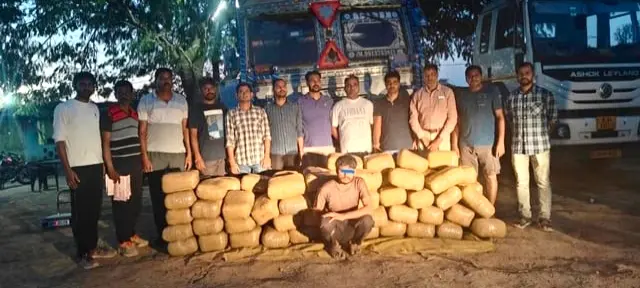
New Delhi: Odisha contributed nearly 27 per cent of 39 lakh kg of cannabis-based drugs seized in India over the last six years, according to government data presented in Parliament.
Cannabis-based drugs include ganja, hashish and hashish oil.
In a written reply in the Lok Sabha, the Ministry of Home Affairs has said that 38.89 lakh kg of cannabis-based drugs were seized between 2020 and November 2025, as reported by Hindustan Times.
While 5.88 lakh kg was seized in 2020, the figure peaked to 8.16 lakh kg in 2021. This was followed by a consistent three-year decline with recoveries of 7.22 lakh kg in 2022, 6.32 lakh kg in 2023 and 5.4 lakh kg in 2024. The seizure rose to 5.89 lakh kg in 2025.
The MHA report revealed that Odisha topped the list of states with the most seizures by a significant margin. The cumulative recoveries over the six-year period was 10.65 lakh kg and the state consistently maintained a lead on the annual charts, according to the government.
Shifts in trafficking patterns were also revealed in the data. While Rajasthan reported a sharp spike in seizures over the period, from 14,826 kg in 2020 to 58,146 kg in 2025, West Bengal also saw an increase, from 25,979 kg in 2020 to 32,456 kg in 2025.
Seizures in some traditional hotspots have dropped in contrast.
Andhra Pradesh, which recorded the second-highest cumulative total of 5.5 lakh kg over six years, saw annual seizures drop significantly from a peak of over 2.01 lakh kg in 2021 to 44,182 kg in 2025.
Similarly, Chhattisgarh and Karnataka recorded sharp declines. While recoveries in Chhattisgarh more than halved from 36,211 kg in 2020 to 15,235 kg in 2025, they decreased from 21,657 kg to 6,746 kg over the same period in Karnataka.
There have been significant recoveries in the Northeast as well. The small border state of Tripura recorded a cumulative seizure of 2.46 lakh kg across six years, placing it fourth on the national tally, just behind the much larger state of Uttar Pradesh. Assam accounted for nearly 1.94 lakh kg during the same period.
Minister of state for home Nityanand Rai detailed the government’s countermeasures and said it deployed advanced technologies, including a grid that integrates AI-based features, radars and motion detectors, and standardised the use of drones along the border to track trafficking routes.
Parliament was also informed that border guarding forces have been empowered under the NDPS Act to carry out searches and seizures. Additionally, international cooperation with neighbouring countries and global agencies has been strengthened to dismantle transnational drug syndicates.

Comments are closed, but trackbacks and pingbacks are open.