


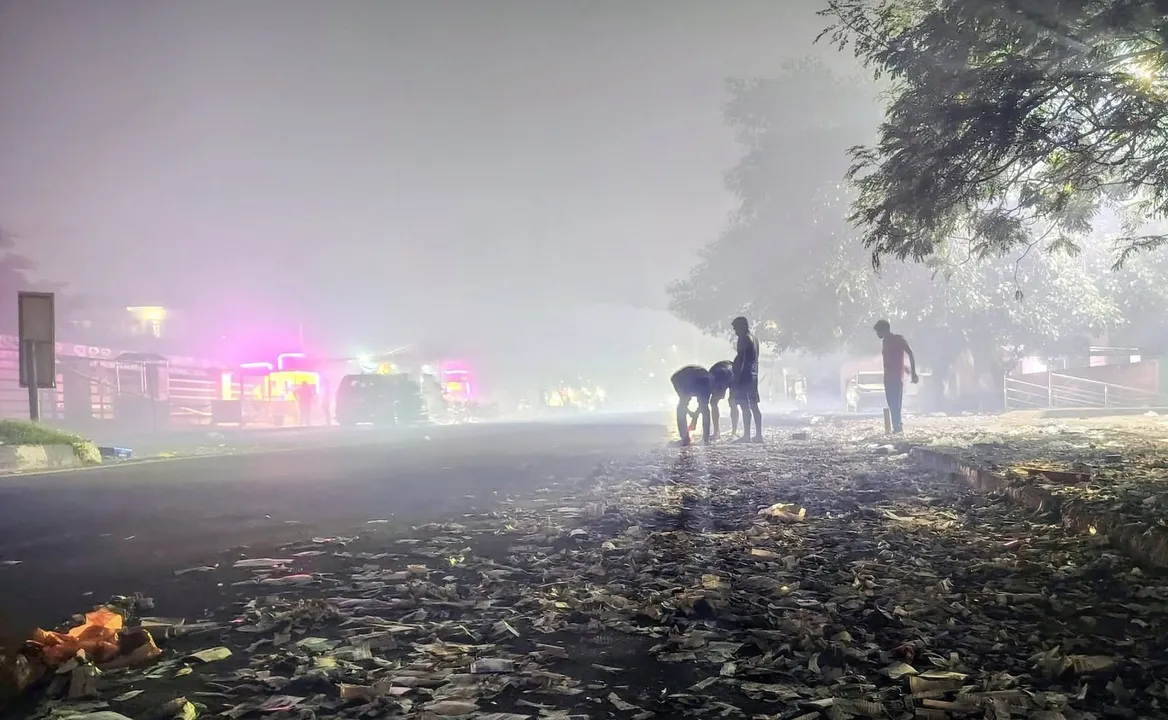
Bhubaneswar: Air pollution in Bhubaneswar reached an alarming level on Diwali night as firecrackers pushed the city’s Air Quality Index (AQI) to an unprecedented 1,444 on Sunday.
According to data available on AQI.in, the city’s AQI peaked at 1,444 around 11 pm, placing it in the extremely hazardous category and raising serious concerns over public health.
The pollution level began rising sharply after firecracker celebrations started in the evening. At 7 pm, Bhubaneswar’s AQI stood at 258. However, it surged to 859 by 8.30 pm and crossed the 1,000 mark, reaching 1,091 at 9 pm.
The situation worsened further, with the AQI touching its highest level of 1,444 at 11 pm. It subsequently declined to 1,345 at 11.30 pm, 1,080 at midnight and 908 at 1 am. The AQI dropped to 305 by around 3.30 am on Monday.
The data also showed alarmingly high concentrations of particulate matter. At 9 pm, PM2.5 levels stood at 622 micrograms per cubic metre, while PM10 levels reached 750 micrograms per cubic metre.
The impact of firecracker bursting remained significant for nearly eight hours, with pollution levels staying elevated from 7 pm to 3 am. During Diwali night, several other cities and towns of Odisha also registered concerning AQI levels. Below are the peak AQI levels of different places in Odisha.
- Kataka: 1366 at 11 pm.
- Puri: 1403 at 11.30 pm.
- Talcher: 1199 at 11.30 pm.
- Brahmapur: 1340 at 9.30 pm.
Such extreme levels of air pollution pose serious health risks, particularly to children, elderly people, pregnant women and those suffering from asthma, respiratory illnesses or heart conditions.
Fine particulate matter such as PM2.5 can penetrate deep into the lungs and even enter the bloodstream. Exposure to high concentrations can trigger coughing, throat irritation, breathing difficulties, wheezing and chest discomfort. It can also aggravate asthma and other existing respiratory conditions.
Prolonged or intense exposure to such polluted air can increase the risk of cardiovascular complications, including heart attacks and strokes. Even otherwise healthy people may experience eye irritation, headaches, fatigue and respiratory discomfort.
Health experts generally advise people to avoid outdoor activities during periods of extreme pollution. Residents, particularly those with existing health conditions, should remain indoors, keep windows and doors closed when outdoor pollution is high and use well-fitted N95 masks if going outside is unavoidable. Anyone experiencing severe breathing difficulties or chest pain should seek immediate medical attention.

Comments are closed.