


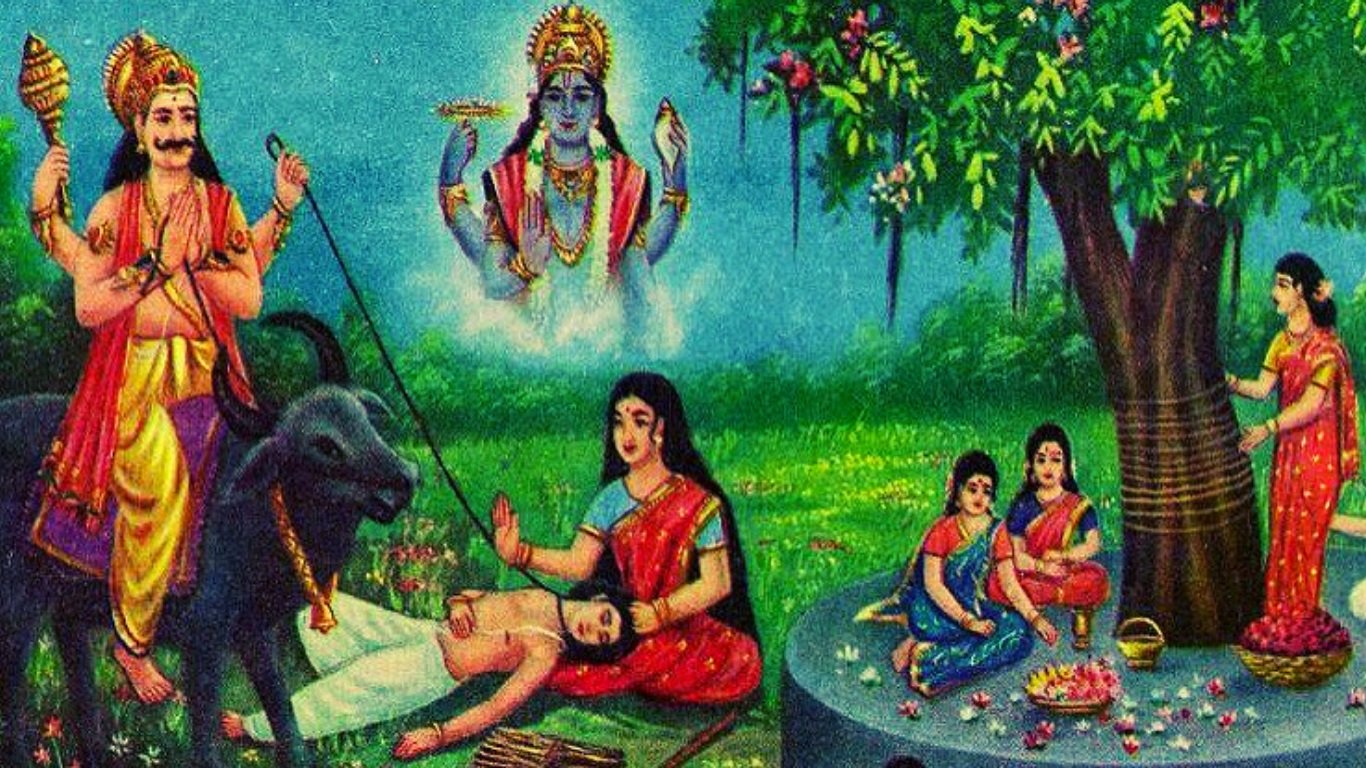
Bhubaneswar: Odisha is popularly known for its tradition of “Bara masa re tera parba”. And, one such important festival is Savitri Brata, observed by married women who pray for the long life of their husbands. It is similar in spirit to Karva Chauth and Teej.
Savitri Brata finds a mention in the Vana Parba of The Mahabharata as well as in The Skanda Purana. The most significant aspect is reading or listening to Savitri Brata Katha, which narrates how Savitri, through her unwavering devotion and determination, was able to bring Satyaban back to life. This day of worship and fasting is a testament to the faith of married women, who hold it auspicious.
Vow of Love and Devotion
According to legend, princess Savitri married Satyaban despite learning that he was destined to die within a year. When Yama came to take Satyaban’s soul, Savitri followed him with unwavering devotion and wisdom. Pleased, Yama granted her several wishes one of which was a hundred sons. Realising she could not have children without Satyaban, Yama restored his life!
Preparation begins with the arrangement of puja paraphernalia. As part of brata observance, women wake up early, take a ritual bath, wear new saree and bangles, and apply sindoor. Husbands often gift new sarees and jewellery. The maternal side also sends traditional Savitri Bhara which includes saree, bangles, sindoor, makeup, fruits and traditional sweets like ukhuda, and khaja for their daughters and sisters. Since the day is dedicated to the worship of Lakshmi Narayana, sankha, sindoor, and alta are also arranged for.
Newly-married techie Monali Dash, who will be celebrating her first brata, shares, “My maternal folks have sent sankha, sindoor, alta, and a special Savitri putuli containing miniature comb, kajal, kala mali, mirror, and a red cloth. My traditional bhara also includes ladoo, khasta gaja, khira gaja, labangalata, puri khaja, jalebi, and ukhuda along with seasonal fruits.”
Group prayers are held in temples, communities, and neighbourhoods. The Savitri Brata Katha is read aloud. Bhoga is arranged in Donas and later distributed among the devotees. After the puja, women perform bandapana for their husbands using a ritual tray containing deepa, dhoopa, flowers, and other puja essentials. They also offer their husbands Duba and coconut. The women then bow before their husbands in the traditional act of mundiaa and serve them the bhoga first, before partaking in it themselves. The bhoga is prepared using sago along with mango, coconut, apple, banana, and other seasonal fruits. It is eaten only once after the rituals are over.
Then & Now
When asked about how relevant the festival is today, young homemaker Upasana Jena shares, “While the festival has evolved over time, its significance remains intact, adapting to changing lifestyles and sensibilities. Many see it as a meaningful way to stay connected to their roots and heritage. Some also wear bridal attire.”

Comments are closed.