


12-Hour Bandh Over Farmers’ Issues & LPG Shortage Halts Life In Odisha’s Malkangiri

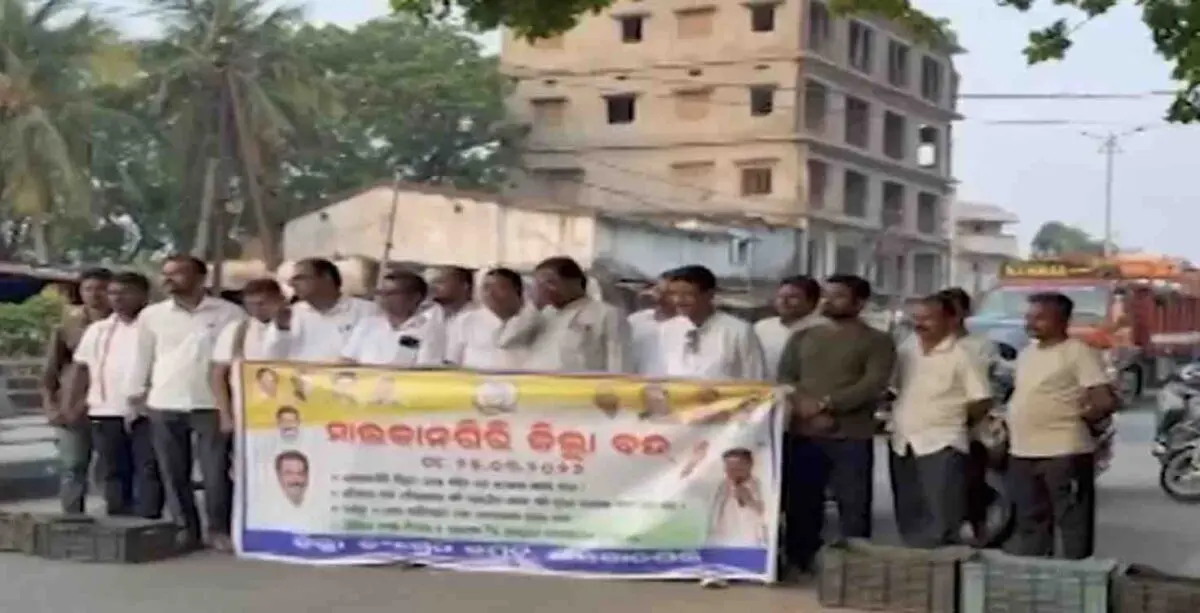
Malkangiri: Life came to a standstill across seven blocks in Odisha’s Malkangiri district on Wednesday as the district unit of the Congress observed a 12-hour bandh in response to a four-point charter of demands, primarily centered on agrarian issues and shortages of essential supplies.
Shops, markets, educational institutions including schools and colleges, and many government offices remained shut, while public transport services were largely unavailable. Vehicular movement was severely restricted due to road blockades staged by Congress workers at multiple locations, including state highway 326 connecting Jeypore with Hyderabad.Emergency services were permitted to operate.
Police were deployed at key points to maintain law and order, and the protest passed off peacefully with no major untoward incidents reported.
The bandh was called to press for the immediate resolution of long-pending grievances affecting thousands of farmers in this tribal-dominated region. Key demands include the urgent lifting of thousands of quintals of harvested paddy that have been lying unsold in various procurement mandis for nearly two months despite tokens being issued to farmers. Protestors alleged that delays by government agencies have exacerbated losses, particularly after unseasonal rains drenched the open heaps, causing sprouting, rotting, and significant financial hardship.
Congress leaders also demanded adequate compensation for crop losses suffered due to these erratic weather events. Another long-standing grievance highlighted was the non-payment of dues to farmers for empty gunny bags, with payments allegedly pending for almost three years. Additionally, the party sought assurances for a regular and adequate supply of petrol, diesel, and LPG cylinders, pointing to acute shortages that have led to long queues in towns and irregular refills in rural areas, severely impacting daily households, hotels, and eateries.
Local Congress workers staged demonstrations and held placards while raising slogans, describing the situation as affecting “everything from the kitchen of the common man to the fields of the farmer.” They criticised administrative apathy and called upon the government to act swiftly to prevent further distress in the backward district.

Comments are closed.